
Washington, D.C.
The Great American Road Trip
at The Watergate Hotel
July 8 - September 23, 2026
Press Release
(Washington D.C.) Unix Gallery announces a group exhibition to celebrate America at its 250th founding anniversary, The Great American Road Trip, at The Watergate Hotel.
Curated by Daniela Mercuri, the exhibition features the works of five contemporary American or international artists, including Regine Mahaux, Norbert Brunner, Eduardo Rezende, Johan Galue, and John Grande, forging a diverse and cosmopolitan symposium on the American history and identity.
The “road trip” serves as both a literal and symbolic framework: a journey across landscapes, ideals, contradictions, and aspirations that define America. Through this lens, the exhibition explores themes of freedom, reinvention, ambition, and cultural influence.
This exhibition positions America not just as a nation, but as a global idea—one that has been exported, reinterpreted, and reimagined across continents. By presenting works from non-American artists, The Great American Road Trip challenges conventional narratives and invites viewers to see the United States through a multifaceted, international lens.
The Great American Road Trip serves as a locus for contemporary international dialogue engaged through neither only praise nor purely criticism but through an informed, critical lens that aims to excavate the true meanings of the American symbolism and the nation itself, including the politics and the governance system, the people, and their culture and ideology.
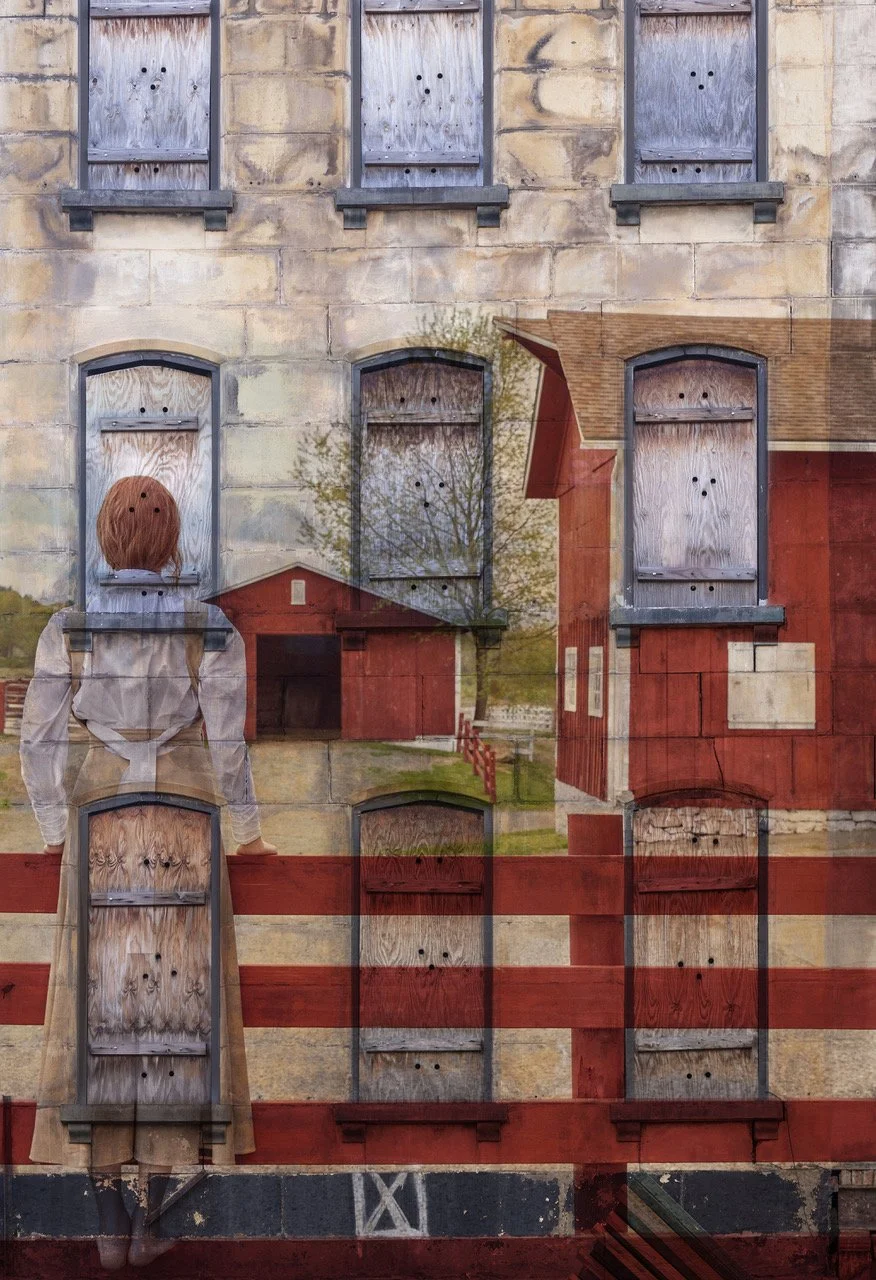
Eduardo Rezende
Visionaire (2020)
Archival pigment print on cotton paper Size : 160 cm x 109 cm (Not available) Edition : 02 + 01 AP Size : 140 cm x 96 cm Edition : 05 + 01 AP
Eduardo Rezende (Brazil) reinterprets national imagery with bold abstraction, exploring emotional and cultural resonance beyond borders.
Rezende’s “Visionaire” depicts a American farmhouse juxtaposed on top of a facade of a townhouse, in which a ginger-haired lady occupies the lower left portion of the space, gazing into the landscape. The work highlights the simultaneous economic link and the political divide between the agricultural and rural areas of America and the big cities where the wealth and people accumulate. Appearing to represent or illustrate iconic scenes and people, the work is ultimately an abstractly superimposed collage that makes connections but also captures the underlying symbolism and the super reality of the subconscious stream of thought.
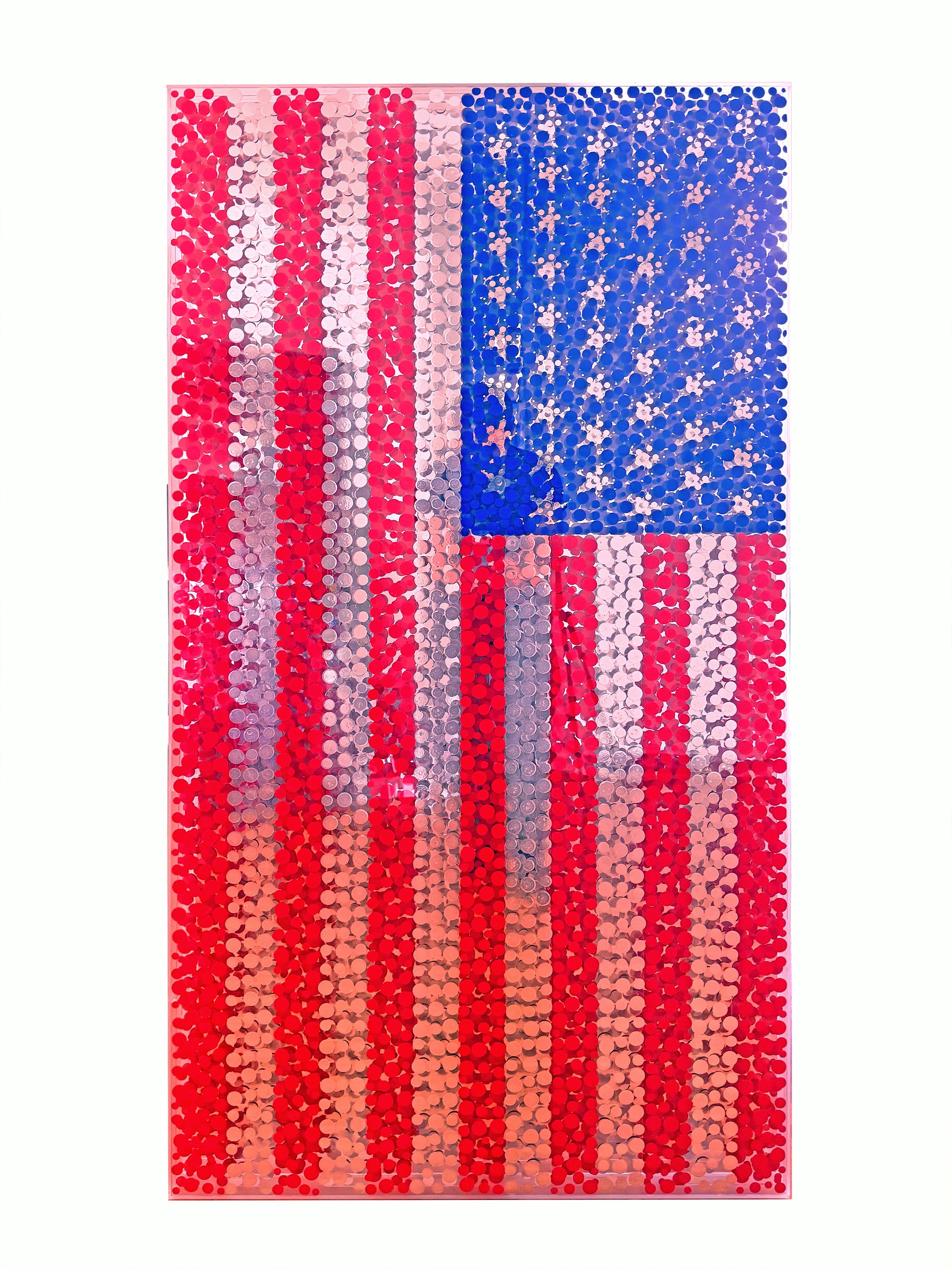
Norbert Brunner
? (2026)
Adhesive tape on acrylic glass, 151 x 81 x 7 cm (59.4 × 31.9 × 2.8 inches)
Norbert Brunner (Austria) deconstructs iconic symbols — particularly the American flag — transforming them into layered, optical experiences that question perception and meaning.
In making “?,” Brunner references the historical works of Jasper Johns and photographer Robert Frank that utilize the flag as a cultural symbol and icon carrying sociopolitical and historical weight. Unlike Johns’ painting, which echoes outward from the central form in a repeating pattern, Brunner assembles a reflective piece that scatters and coagulates the subject in the reflection, and superimposes it onto the idea or the effect of a flag. The work does not detail the American flag as an object; rather it captures the idea, the feel, and the personality of the flag, which are its core attributes, rather than any literal and singular physical rendition of the flag.
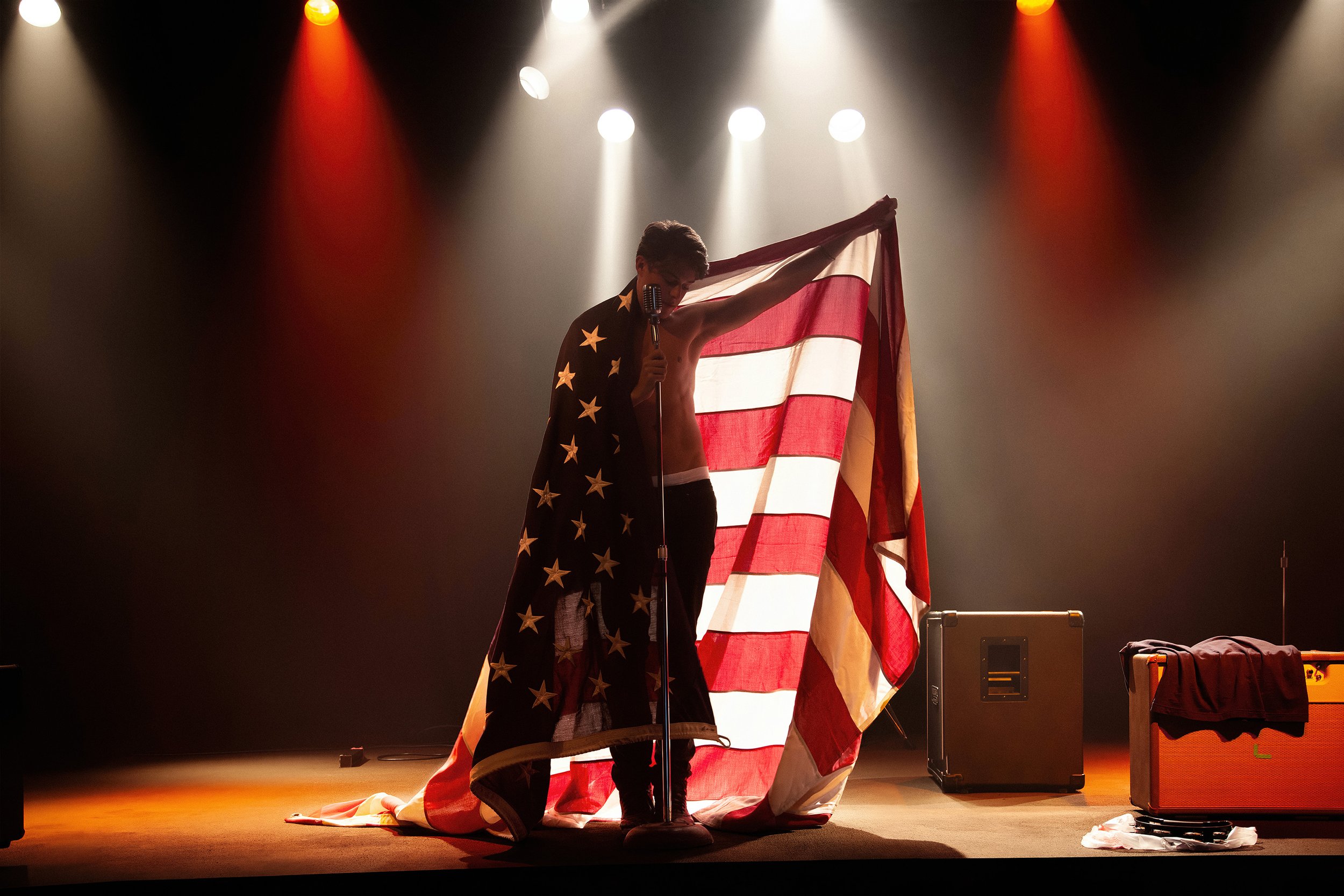
Régine Mahaux
US Flag (2010)
Photograph as Light jet exposure on high, glossy paper, alu-dibond
120 × 84 inches.
Régine Mahaux (Belgium) captures the human dimension of American identity through intimate portraiture, revealing both power and vulnerability.
Mahaux’s photograph of the man wrapped in the American flag and raising it with his hand is a powerful metaphor of both patriotism, love, and reverence the person holds for the country. This theatrical and bold image carries much more in terms of the psychological significance than just a realistic rendering of a flag. Mahaux’s work is not realism; it is cinematic idealism reflective of the aesthetic virtues of Hollywood and the beauty of the American people and cities.
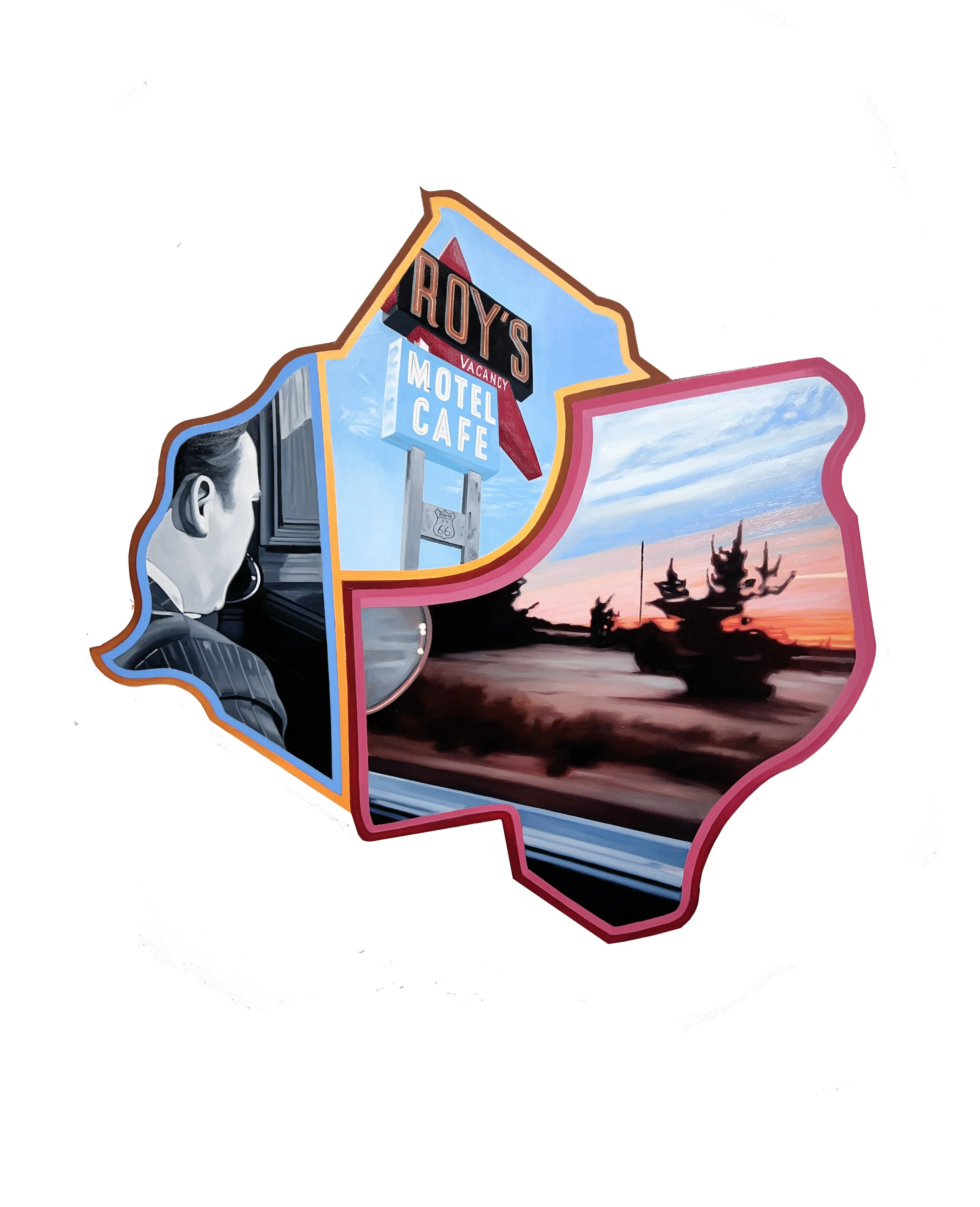
John Grande
No Vacancy (2026)
Oil on repurposed structured wooden boards
53 x 55 inches.
John Grande (USA), as an Italian American, reflects upon modern and contemporary culture with his constructed paintings, sculptures and murals, which engage with American Dreams, fantasies, and obsessions.
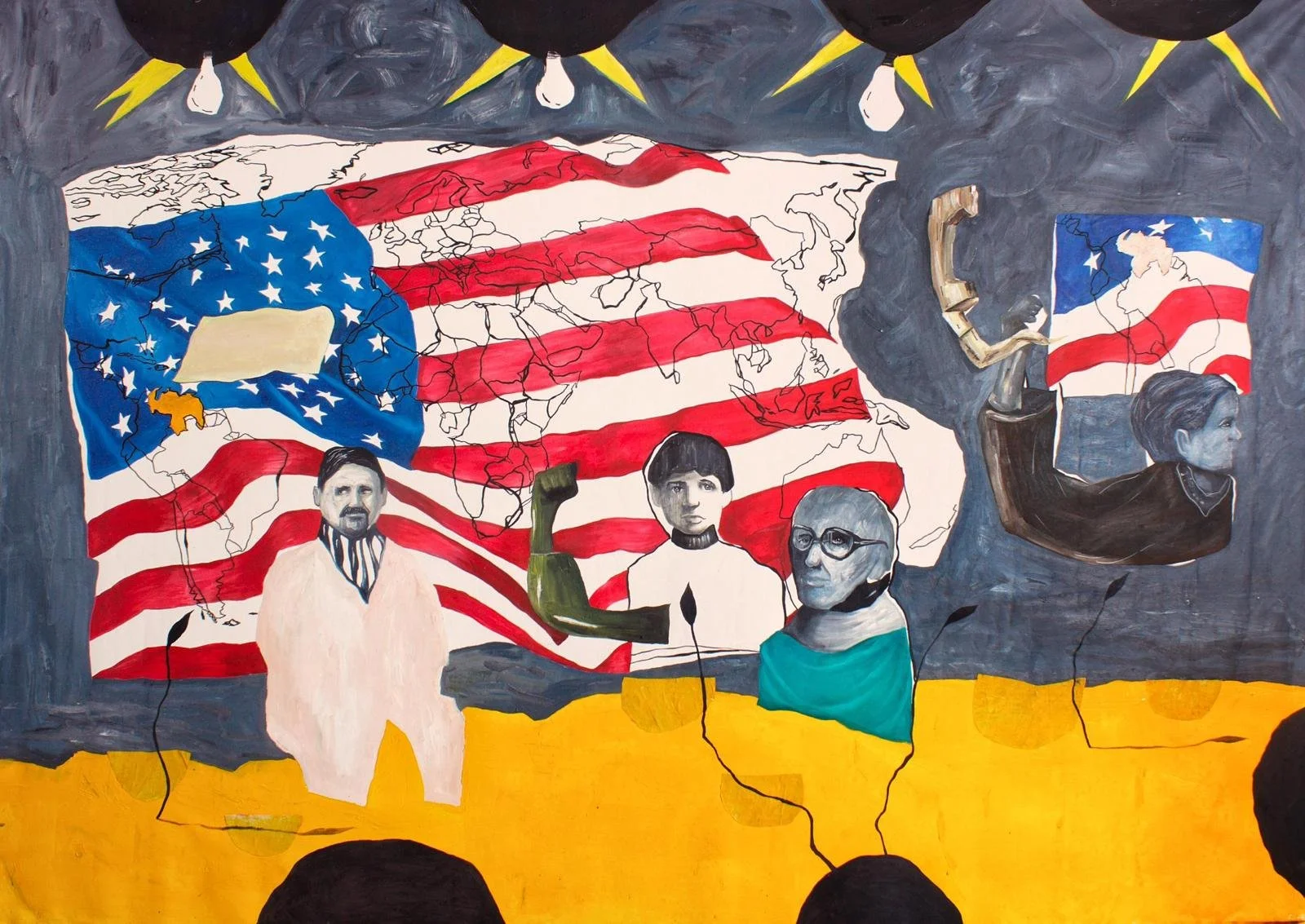
Johan Galue
Americana (2026)
Oil on canvas
74 × 108 inches.
Johan Galue (Venezuela) examines the aesthetics of consumerism and national identity, bridging pop culture with political undertones.